The 2026 midterm election changed control of Congress and increased expectations that artificial intelligence companies, data-center projects, and automated decision systems will face more scrutiny.
That does not mean a comprehensive federal AI law has already passed. Divided government, competing policy goals, agency authority, state legislation, litigation, and implementation timelines will continue to shape the outcome.
Legal teams should avoid predicting one inevitable statute. The practical task is to prepare the organization for more oversight, more information requests, and a less uniform regulatory environment.
What Changed After the Midterms
The Associated Press reported that Democrats won control of both chambers of Congress in the November 2026 midterm elections.
Congressional control affects committee leadership, hearings, subpoenas, investigations, budget negotiations, and the ability to place issues on the legislative agenda. It does not eliminate the president's veto power or guarantee agreement within Congress.
AI policy may develop through several channels at once:
• Congressional hearings and investigations.
• Federal agency enforcement and guidance.
• State legislation and attorney general activity.
• Court decisions involving AI products and practices.
• Procurement standards and contractual requirements.
• Voluntary commitments and industry controls.
An organization that waits for one final federal rule may miss obligations arising elsewhere.
Expect Questions About Governance, Not Only Technology
Oversight bodies often begin by asking who knew what, who approved the system, what risks were identified, and how incidents were handled.
Legal teams should be able to explain:
• Which AI systems the organization develops, buys, or permits.
• What decisions or workflows each system supports.
• Which data it receives and where that data goes.
• Which uses require human review.
• How performance and harms are monitored.
• Who can suspend or change the system.
• What records are preserved.
These answers should reflect actual operations, not an aspirational policy that users do not follow.
Create an AI System Inventory
An inventory is the foundation for risk assessment and response. It should include internally developed systems, purchased tools, embedded AI features, model providers, employee use, and customer-facing capabilities.
Useful fields may include owner, purpose, users, affected groups, data categories, model or provider, decision impact, human review, deployment region, contractual restrictions, and current status.
Do not treat the inventory as a one-time spreadsheet. Establish an intake process for new uses and material changes. Procurement, security, privacy, product, HR, compliance, and legal teams may each see a different part of the AI environment.
Classify Systems by Risk and Consequence
Not every AI feature requires the same controls. A tool that summarizes public documents differs from a system that influences employment, credit, housing, health, education, insurance, legal rights, or access to essential services.
Risk classification should consider the decision supported, the people affected, the sensitivity of the data, the possibility of discrimination or deception, the reversibility of harm, and the organization's ability to verify the output.
The NIST AI Risk Management Framework provides a voluntary structure for governing, mapping, measuring, and managing AI risk. Organizations can adapt it to applicable law and sector-specific duties.
Prepare for State-by-State Compliance
Federal uncertainty does not stop state activity. States may regulate automated decisions, discrimination, privacy, consumer disclosures, employment tools, health data, elections, deepfakes, or specific high-risk uses.
Legal teams should map where systems are offered, where affected individuals reside, and which entities perform regulated roles. A single product may require different notices, assessments, appeal rights, or human-review processes across jurisdictions.
Build reusable control components where possible. Examples include notice templates, risk assessments, impact testing, data maps, human-review procedures, incident escalation, and documentation standards.
Avoid treating state compliance as a collection of disconnected memos. Connect each requirement to the responsible workflow and owner.
Review AI Vendor Contracts
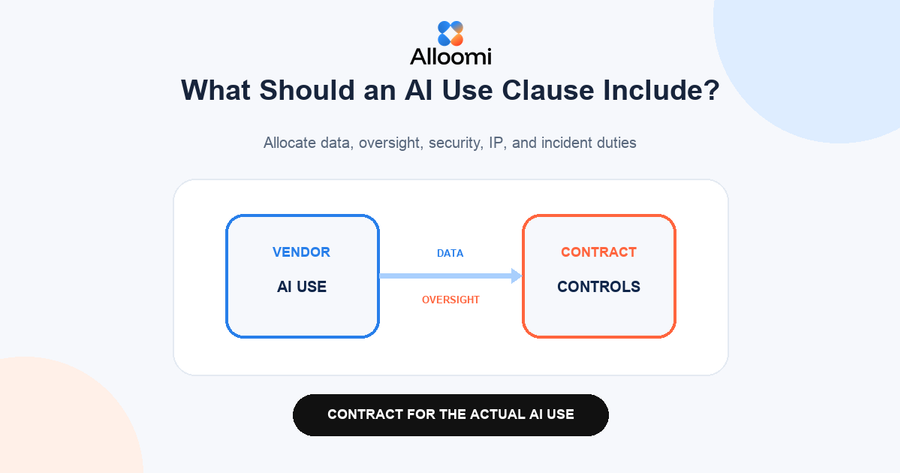
Organizations may be accountable for uses that depend on third-party systems. Vendor agreements should support the information and controls the customer needs.
Review terms covering:
• Permitted data use and model training.
• Model providers and subprocessors.
• Security and access controls.
• Performance documentation and testing.
• Human oversight and escalation.
• Regulatory cooperation and audit evidence.
• Incident notice and corrective action.
• Intellectual property and third-party claims.
• Suspension, termination, data return, and deletion.
If the vendor cannot provide enough information for a required assessment, that limitation should be addressed before deployment rather than discovered during an inquiry.
Connect Public Claims to Evidence
Election and regulatory attention can increase scrutiny of statements about AI safety, privacy, accuracy, job effects, energy use, content controls, and product capabilities.
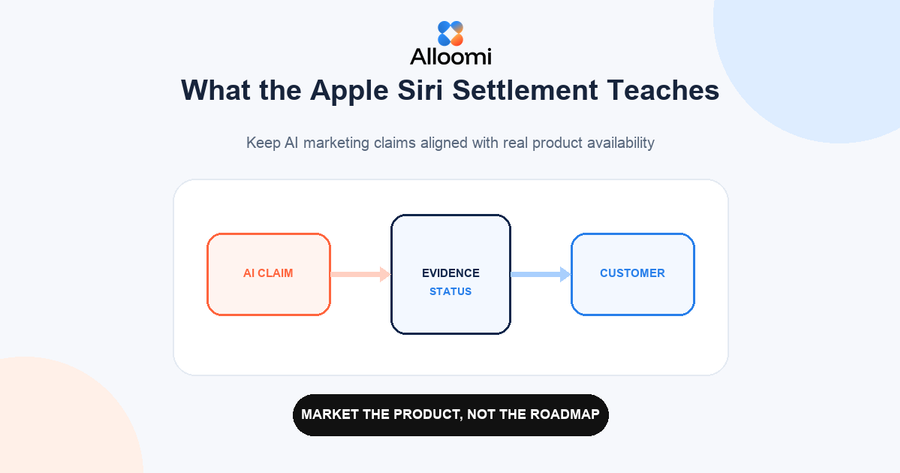
Companies should identify their material AI claims and connect each one to current evidence, an approved owner, and a revalidation date. Marketing, investor relations, procurement responses, policy submissions, and customer contracts should not describe the same system in materially inconsistent ways.
If the system changes, update the claims and supporting record. A statement that was accurate for one model version may not remain accurate after a provider, dataset, workflow, or deployment changes.
Strengthen Human Review for Consequential Uses
"Human in the loop" is not meaningful unless the reviewer has time, authority, information, and competence to challenge the system.
Document which decisions require review, what evidence the reviewer receives, when escalation is mandatory, and how overrides are recorded. Test whether employees actually understand the process.
For high-risk uses, consider whether the reviewer can see the source data, limitations, and uncertainty rather than only the AI recommendation.
Build a Regulatory Response Record
An organization should be able to respond to a regulator, congressional committee, auditor, customer, or court without reconstructing its AI program from scattered messages.
Relevant records may include system inventories, risk assessments, approvals, testing, data maps, policies, training, vendor diligence, contracts, incident reports, complaints, monitoring results, model changes, and corrective actions.
Preservation should be proportionate and consistent with privacy, privilege, retention, and litigation-hold requirements. More data is not automatically better. The objective is a reliable record of material decisions.
Monitor Developments Without Turning Every Headline Into a Requirement
Post-election proposals, speeches, investigations, enacted laws, agency rules, court orders, and voluntary commitments have different legal effects.
Regulatory monitoring should record the source, jurisdiction, status, effective date, affected systems, required action, owner, and completion evidence. Separate political signals from binding obligations while recognizing that both may influence business planning.
For an operational workflow, see From Regulatory Update to Legal Action: How AI Helps Teams Keep Up.
How Alloomi Can Support Legal Review and Regulatory Tracking
Alloomi AI can help legal teams analyze regulatory materials, contracts, policies, and internal documents while keeping findings connected to the underlying sources for human review.
Alloomi does not predict which proposal will become law. It can support the more practical work of comparing new requirements with current documents, identifying affected provisions, organizing evidence, and preparing updates for responsible decision-makers.
A Practical 2027 Readiness Checklist
Before 2027, legal teams should be able to confirm that:
• Material AI systems and owners are recorded.
• High-risk uses have documented review and escalation.
• Vendor contracts support data, testing, incident, and audit needs.
• Public AI claims are linked to current evidence.
• State-law obligations are mapped to operations.
• Complaints and incidents reach legal and compliance teams.
• Material decisions can be reconstructed.
• Regulatory developments are assigned to named owners and actions.
The checklist should be adapted to the organization's products, industry, jurisdictions, and risk.
Conclusion
The 2026 midterms changed the political environment for AI oversight, but they did not create one complete federal compliance rule overnight.
Legal teams should prepare for a combination of congressional scrutiny, agency action, state laws, litigation, contract pressure, and customer expectations. The durable response is an operational governance system: know which AI systems are in use, connect claims to evidence, control high-risk decisions, strengthen vendor terms, and preserve a record of human accountability.
Frequently Asked Questions
1. Did the 2026 midterms create new AI laws immediately?
No. The election changed political control and oversight priorities, but new legal obligations still depend on enacted laws, valid rules, court decisions, and existing authorities.
2. What should legal teams do first?
Create or validate an AI system inventory. Without knowing which systems, data, decisions, providers, and jurisdictions are involved, the organization cannot apply requirements reliably.
3. Should companies wait for a comprehensive federal AI law?
No. Existing laws, state requirements, contracts, agency enforcement, and litigation may already affect AI uses. Readiness work can begin without predicting the final federal framework.