Anthropic completed its initial public offering in November 2026 at an offering price of $83 per share. The listing turned employee equity into a visible market value, but it did not make every vested share immediately sellable.
Employees and former employees may face overlapping restrictions from vesting schedules, IPO lock-ups, market-standoff clauses, trading windows, securities laws, tax rules, and the mechanics of option exercise or RSU settlement. The controlling answer comes from the actual documents, not a generic “180-day lock-up” rule.
What Anthropic's Prospectus Says
Anthropic's final SEC prospectus describes different lock-up periods and specified early-release provisions for different groups of holders. Certain founders and larger holders may be restricted for up to 365 days or until a specified earnings-related date, while other holders are subject to a different period and potential early releases.
A separate resale registration filing covers shares held by certain current or former employees, directors, consultants, and advisers. Registration does not automatically remove every contractual, company-policy, or legal restriction on a particular person.
Vesting, Settlement, Exercise, and Sale Are Different
Vesting means the service or performance condition has been satisfied. An RSU may still need to settle into shares. A stock option may require exercise, payment of the strike price, and tax withholding. A share may be owned but remain subject to transfer restrictions.
Employees should separate four dates:
• The date an award vests.
• The date an RSU settles or an option is exercised.
• The date a contractual lock-up or market standoff permits transfer.
• The date the company opens a trading window and the employee is legally clear to trade.
Confusing these dates can create missed exercise deadlines, unexpected taxes, or a prohibited transaction.
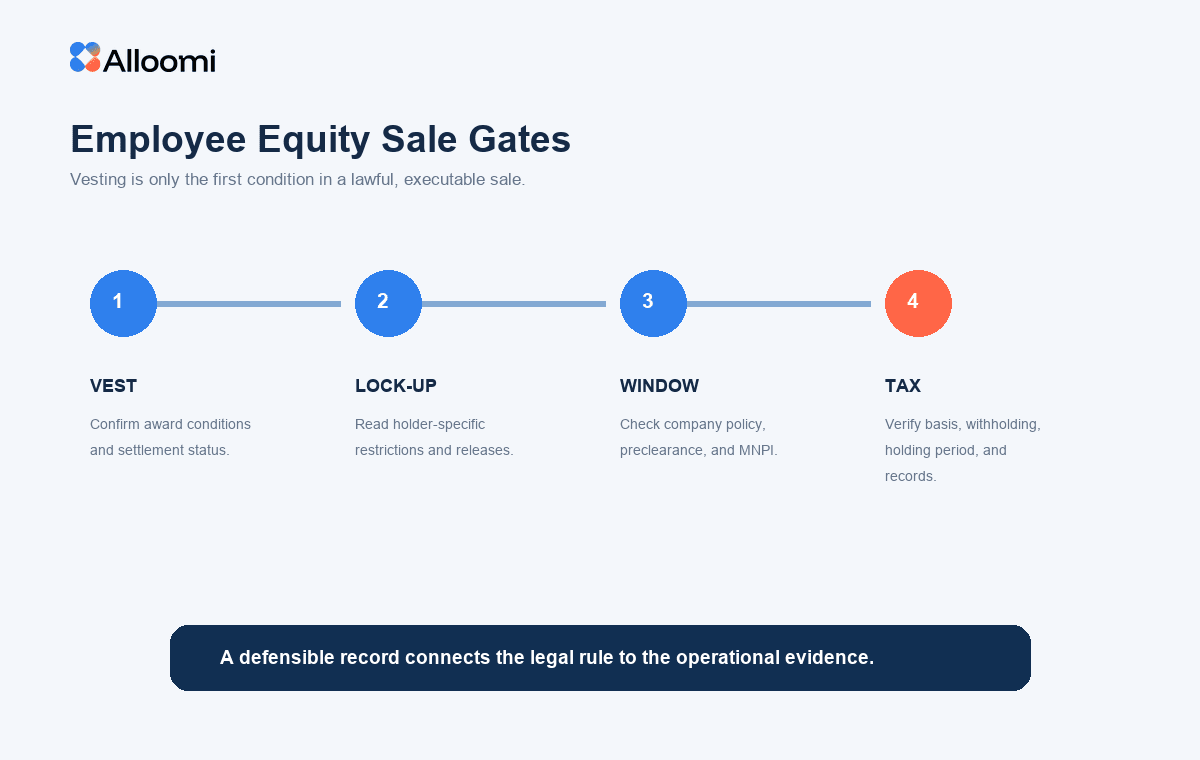
A vested award reaches the market only after every applicable sale gate is cleared.
Why “180 Days” Is Not a Complete Answer
Many IPO explanations use 180 days as shorthand, but lock-ups vary. The prospectus may provide tiered releases, earnings-based dates, extensions, waivers, or different treatment for founders, executives, employees, and private-placement investors.
The employee should review the award agreement, equity plan, exercise notice, market-standoff language, lock-up agreement, company trading policy, prospectus, and any release notice. A social-media post about another employee's sale is not evidence that the same rules apply.
Trading Windows and Insider Information
Even after a lock-up expires, a person may be restricted by an insider-trading policy or applicable securities law. Employees with material nonpublic information should not trade merely because the brokerage account shows that shares are available.
Companies commonly use quarterly windows and preclearance procedures, but the exact policy controls. Former employees should confirm whether post-employment restrictions or continuing access to confidential information affect them.
Tax Questions to Identify Before Selling
Tax treatment depends on the award, jurisdiction, exercise history, holding period, and individual circumstances. Options, RSUs, and purchased shares can create different income and capital-gain events.
Records should include grant notices, vesting statements, option exercise confirmations, strike price, fair-market value used for withholding, tax forms, brokerage basis, and sale confirmations. Employees should obtain personal tax advice rather than relying on company-wide illustrations.
What to Check in an Offer Letter and Equity Package
• The number and type of awards, not only the headline value.
• The vesting start date, cliff, schedule, and performance conditions.
• What happens on resignation, termination, disability, death, or acquisition.
• The post-termination option exercise period.
• Repurchase, clawback, forfeiture, transfer, and market-standoff provisions.
• Whether the company can amend the plan or impose an IPO lock-up.
• Governing law, dispute procedures, confidentiality, and restrictive covenants.
The equity plan and award agreement usually contain details the offer letter omits. Contract review should therefore include the full document set. Alloomi's guides to employment agreements, non-compete clauses, and document version control provide related workflows.
How Alloomi Can Support Equity Document Review
Alloomi AI can help authorized legal teams organize offer letters, award agreements, plan documents, amendments, prospectus disclosures, and employee communications for human comparison. It does not provide individualized investment or tax advice.
The practical message is simple: IPO wealth is a valuation event, not an unrestricted sale instruction. Employees should clear every contractual, company, securities, and tax gate before acting.
Frequently Asked Questions
1. Can Anthropic employees sell shares immediately after the IPO?
Not necessarily. The answer depends on their specific award, lock-up, release provisions, company trading policy, and securities-law status.
2. Does vesting mean shares can be sold?
No. Vesting satisfies an award condition, but settlement, exercise, lock-up, trading-window, and legal restrictions may remain.
3. Is every IPO lock-up 180 days?
No. Lock-ups and early releases vary by offering, holder category, agreement, and prospectus terms.