A legal handoff occurs when responsibility moves from one lawyer or team to another. It may happen because of leave, workload, promotion, departure, conflict, client request, or a change in matter stage.
The new lawyer can open the same files and still lack the context required to act safely. Important information may remain in private notes, emails, conversations, draft history, or the previous lawyer's memory.
A reliable handoff transfers decisions and unfinished work, not merely documents.
Why Matter Transfers Create Risk
Legal files record what happened. They do not always explain why it happened or what must happen next.
Common handoff failures include:
• Deadlines are transferred without their calculation or source.
• Client instructions remain in the former lawyer's inbox.
• Drafts are available, but the governing version is unclear.
• The new lawyer cannot distinguish approved positions from abandoned ideas.
• Open factual questions are not identified.
• Relationships, sensitivities, and communication expectations are lost.
• Tasks appear complete even though approval or delivery remains outstanding.
The risk increases when the transfer is urgent or the departing person is unavailable.
Start With the Current Matter Position
The handoff should begin with a short statement of where the matter stands now.
Include the objective, current stage, recent developments, immediate risk, next external event, and decision required from the incoming lawyer. This gives the recipient a framework for reading the supporting material.
Avoid writing a long history before identifying the urgent point. The first page should answer: What needs attention now?
Transfer Deadlines With Their Sources
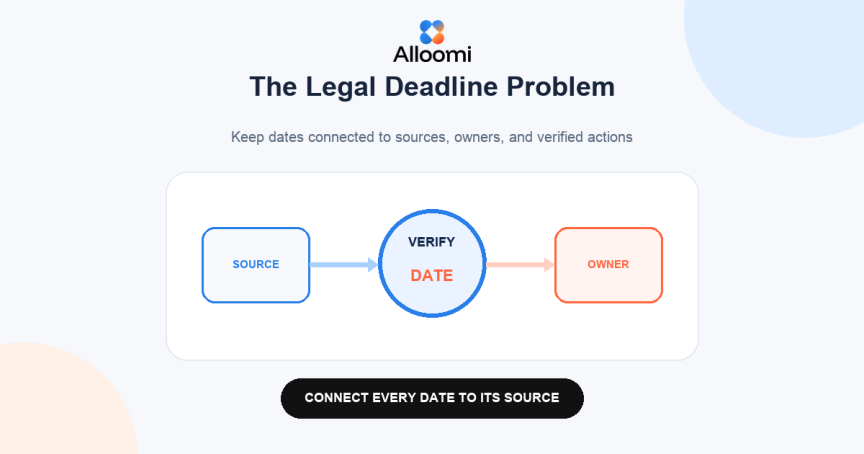
List external deadlines and internal milestones, including time zones, responsible people, and verification status. Link each critical date to the controlling order, rule, contract, notice, or communication.
Identify dates that are provisional, disputed, or subject to extension. Confirm whether the calendar and task system have already been updated.
For deadline controls, see The Legal Deadline Problem: How Lawyers Stop Dates From Getting Lost.
Identify the Governing Documents
The incoming lawyer should know which documents control the matter. These may include an executed agreement, amended pleading, current scheduling order, final policy, signed engagement, or latest approved draft.
Separate governing documents from working drafts, duplicates, and superseded versions. Link amendments and related materials.
If no one can identify the current version quickly, resolve that issue during the handoff rather than leaving it for the new lawyer to discover under deadline pressure.
Preserve Client Instructions and Decision Authority
Summarize material client instructions, approvals, constraints, and open questions. Identify who within the client organization has authority for different decisions.
Record the source and context of important instructions. A client's position may depend on a particular fact, budget, relationship, or negotiation stage.
Do not treat a one-time concession as a permanent rule. Mark superseded instructions and explain what changed.
Explain Strategy Without Overstating Certainty
The outgoing lawyer should explain the current theory, priorities, risks, and alternatives. Distinguish facts from assumptions and legal conclusions.
A useful strategy section may identify:
• The desired outcome.
• Strong and weak points.
• Evidence supporting or challenging the position.
• Important counterparties and decision-makers.
• Options already considered.
• Positions approved or rejected by the client.
• Events that would change the recommendation.
This allows the incoming lawyer to exercise independent judgment without unknowingly repeating earlier work.
List Open Work and Hidden Dependencies
Every unfinished task should have an owner, due date, status, and dependency. Identify work waiting on the client, expert, court, regulator, counterparty, vendor, or another team.
Hidden dependencies cause many handoff failures. A draft may appear ready while awaiting a factual confirmation. A filing may depend on an exhibit. A contract approval may depend on security review.
Label blocked work and identify the person responsible for obtaining the missing input.
Transfer Relationships and Communication Expectations
Legal work depends on people as well as documents. The incoming lawyer should know the relevant client contacts, opposing counsel, regulators, experts, vendors, and internal specialists.
Record communication preferences and sensitivities that materially affect service. Examples include who should receive updates, which issues require immediate escalation, and whether the client prefers calls before written advice.
Avoid including personal commentary that is unnecessary or inappropriate. Focus on information relevant to professional work.
Conduct a Live Handoff When Risk Warrants It
A written summary is essential, but a live meeting can reveal uncertainty and assumptions that the document misses.
Use the meeting to review deadlines, source documents, current strategy, open questions, client expectations, and the next 30 days of work. The incoming lawyer should ask questions and confirm access.
For high-risk matters, include a short overlap period in which both lawyers remain available.
Confirm the Handoff Is Complete
The transfer should end with explicit acceptance by the incoming lawyer or supervisor. Confirm that the new owner has access to systems, understands immediate obligations, and has updated the client or other stakeholders where appropriate.
Reassign tasks, calendar entries, approval routes, alerts, and document permissions. A narrative handoff is incomplete if the operational systems still point to the former lawyer.
Use a Standard Matter Handoff Record
A repeatable handoff template reduces omissions. Useful sections include:
• Matter objective and current status.
• Immediate decision or risk.
• Critical dates and sources.
• Governing documents and versions.
• Client instructions and authority.
• Strategy, assumptions, and alternatives.
• Open tasks, dependencies, and owners.
• Key contacts and communication plan.
• Access, privilege, confidentiality, and ethical walls.
• Incoming lawyer acceptance and supervisor review.
Adapt the depth to the matter. A routine contract does not need the same transfer record as major litigation.
How AI Can Help Build the Handoff
AI can help locate recent documents, summarize activity, identify open questions, extract deadlines, compare versions, and prepare a draft matter chronology.
It may miss off-system conversations, misunderstand strategy, or present an old position as current. The outgoing and incoming lawyers should verify the handoff against source material and their professional judgment.
Alloomi AI can help legal teams connect matter documents, conversations, decisions, and prior work so the next lawyer spends less time reconstructing context. See Legal Knowledge Management With AI for the wider knowledge workflow.
Conclusion
A matter handoff succeeds when the new lawyer can understand the current position, verify deadlines, find governing documents, apply client instructions, and continue the work without guessing.
Use a standard record, connect statements to sources, expose dependencies, update operational systems, and obtain explicit acceptance. AI can accelerate preparation, but responsible lawyers must decide what context is material and whether the transfer is complete.
Frequently Asked Questions
1. What should be included in a legal matter handoff?
Include current status, immediate risks, deadlines and sources, governing documents, client instructions, strategy, open work, dependencies, contacts, permissions, and the next required actions.
2. Is a folder of documents enough for a handoff?
No. Documents may not reveal which version controls, why a decision was made, what remains open, or which deadline needs immediate attention.
3. Can AI create the final handoff summary automatically?
AI can prepare a draft from authorized sources, but the responsible lawyers should verify deadlines, instructions, strategy, privilege, and current status before relying on it.
This article provides general information and is not legal advice.