AI conversations can contain mental-health disclosures, relationship details, financial concerns, location information, and messages written by children. When an AI company enters bankruptcy, those records may sit inside the assets a buyer wants to acquire. They are not ordinary inventory.
Character Technologies, the company behind Character.AI, brought that issue into focus in November 2026. A bankruptcy court ordered the appointment of a consumer privacy ombudsman before a proposed sale involving user accounts, chat data, sensitive personal information, and AI-related assets could move forward.
Why AI Chat Data Becomes a Bankruptcy Issue
Bankruptcy sales are designed to preserve value, pay creditors, and transfer viable operations. User data may support the platform's continued operation, model safety, personalization, or account history. But a transfer can conflict with promises users received when they disclosed information.
The Oregon Department of Justice said the court-appointed reviewer would evaluate privacy consequences before any sale. The concern was especially acute because conversations included sensitive material from minors.
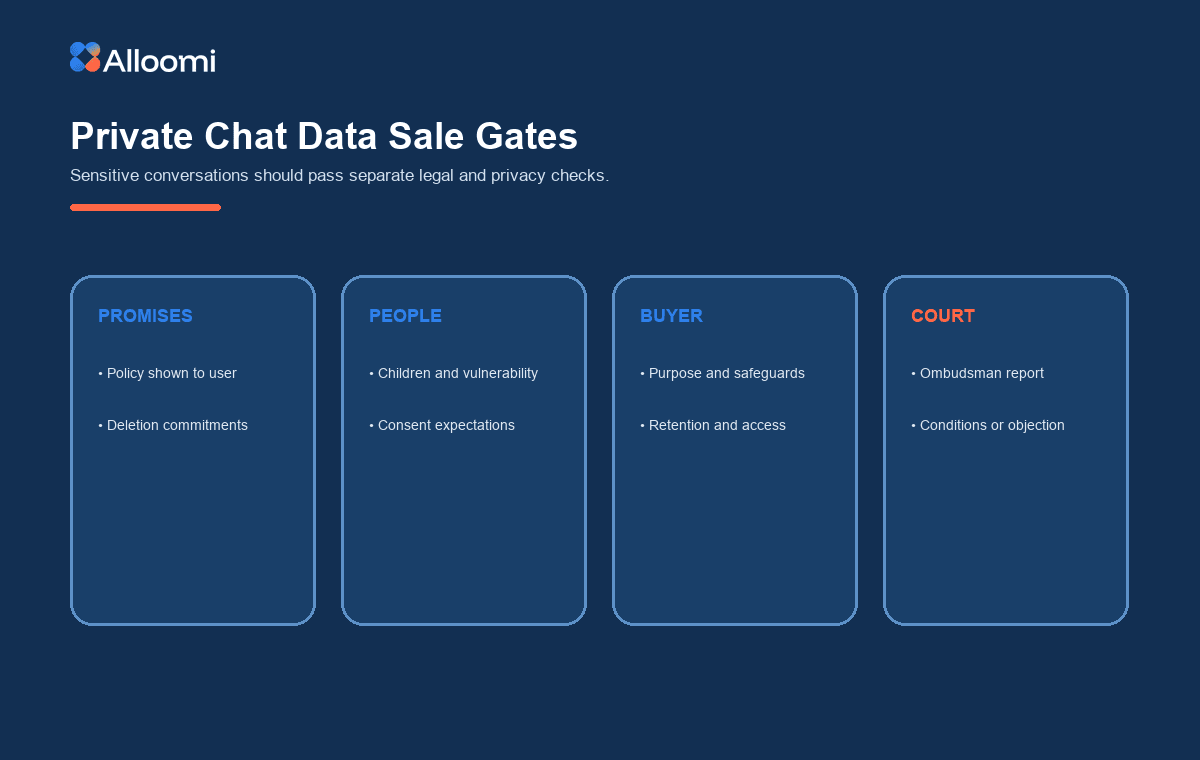
A sale should not move from asset value to transfer without checking promises, consent, sensitivity, and buyer controls.
What a Consumer Privacy Ombudsman Does
Under the U.S. Bankruptcy Code, a consumer privacy ombudsman may provide the court with information about the privacy implications of a proposed sale. The role is independent. It does not automatically approve or block the transaction.
The review may examine:
• What the company promised in its privacy policy and product interface.
• Whether users expected conversations to remain private or deletable.
• The sensitivity, age, and purpose of the data.
• Whether the buyer will change permitted uses.
• Security controls, retention periods, deletion rights, and notice.
• Whether children or other vulnerable users require additional safeguards.
The appointment creates a structured record for the court. It also highlights why companies need a traceable privacy inventory before distress occurs.
Does Bankruptcy Cancel Existing Privacy Promises?
Not automatically. Bankruptcy changes control over assets, but it does not erase every applicable privacy or consumer-protection obligation. The sale structure, existing policy language, applicable nonbankruptcy law, and proposed buyer practices all matter.
A statement that data may be transferred during a merger or asset sale is not necessarily the end of the analysis. A legal team should ask whether the transfer introduces a materially different purpose, whether separate consent is required, and whether earlier representations created enforceable expectations.
This is also why sensitive discussions should not be treated as privileged merely because they occurred with a chatbot. See Can Using AI Waive Attorney-Client Privilege? and When AI Chatbots Become Advisors, Who Is Liable?.
What AI Companies Should Prepare Before Financial Distress
Companies should know which systems contain conversation content, account identifiers, safety signals, training records, and deleted-data remnants. They should preserve the policy version shown to each user and document which downstream vendors can access the records.
Contracts should address data return, deletion, model-training rights, business continuity, subcontractors, and a change of control. The commercial terms should align with the public privacy statements. Guidance on AI vendor contract terms can help legal teams connect those promises.
How Alloomi Can Support a Traceable Data Review
Alloomi AI can help authorized legal teams organize policies, vendor terms, data inventories, notices, and transaction documents so reviewers can trace a proposed data use back to its source. Human counsel must still determine consent requirements, statutory limits, and the position taken before the bankruptcy court.
The broader lesson is that private AI chat data carries obligations with it. A buyer may acquire technology and operations, but sensitive records should pass through a separate legal and privacy review.
Frequently Asked Questions
1. Can an AI company sell user chats in bankruptcy?
Possibly, but the court may need to consider privacy promises, applicable law, the nature of the data, and proposed protections.
2. What is a consumer privacy ombudsman?
It is an independent reviewer who advises the bankruptcy court about privacy issues raised by a proposed sale of consumer information.
3. Should users delete sensitive AI chats?
Users should review available deletion controls and the provider's retention policy. Deletion from the interface may not always mean immediate removal from every system.