A publicity clause determines whether one party may use the other party's name, logo, trademarks, statements, or relationship in marketing. It may cover website customer lists, pitch decks, press releases, case studies, social posts, event materials, testimonials, and conversations with prospective customers.
The clause can look minor, but uncontrolled use may imply an endorsement, reveal a confidential relationship, violate brand standards, or continue after the underlying agreement ends. A practical review should define consent, approved assets, permitted claims, channels, approval workflow, duration, and removal duties.
Identify Every Type of Public Use
Begin by listing the uses the clause permits. “Marketing purposes” is rarely precise enough.
• Displaying the customer's name or logo on a website.
• Naming the customer in sales presentations or investor materials.
• Publishing a press release or partnership announcement.
• Creating a case study, testimonial, quote, or video.
• Discussing results with prospective customers or analysts.
• Using screenshots, metrics, employee names, or product images.
These uses carry different risks and should not be bundled into one unrestricted permission. A logo on a private sales deck is not equivalent to a public testimonial containing performance claims.
Decide Whether Consent Is Opt-In or Automatic
An opt-in clause requires affirmative approval before any public use. An automatic permission allows specified uses unless the customer objects. The appropriate model depends on bargaining position, industry sensitivity, and the type of relationship.
For confidential, regulated, government, security-sensitive, or strategically important customers, prior written consent may be necessary for every use. For lower-risk relationships, the agreement may preapprove a narrow website logo placement while requiring separate approval for press releases and case studies.
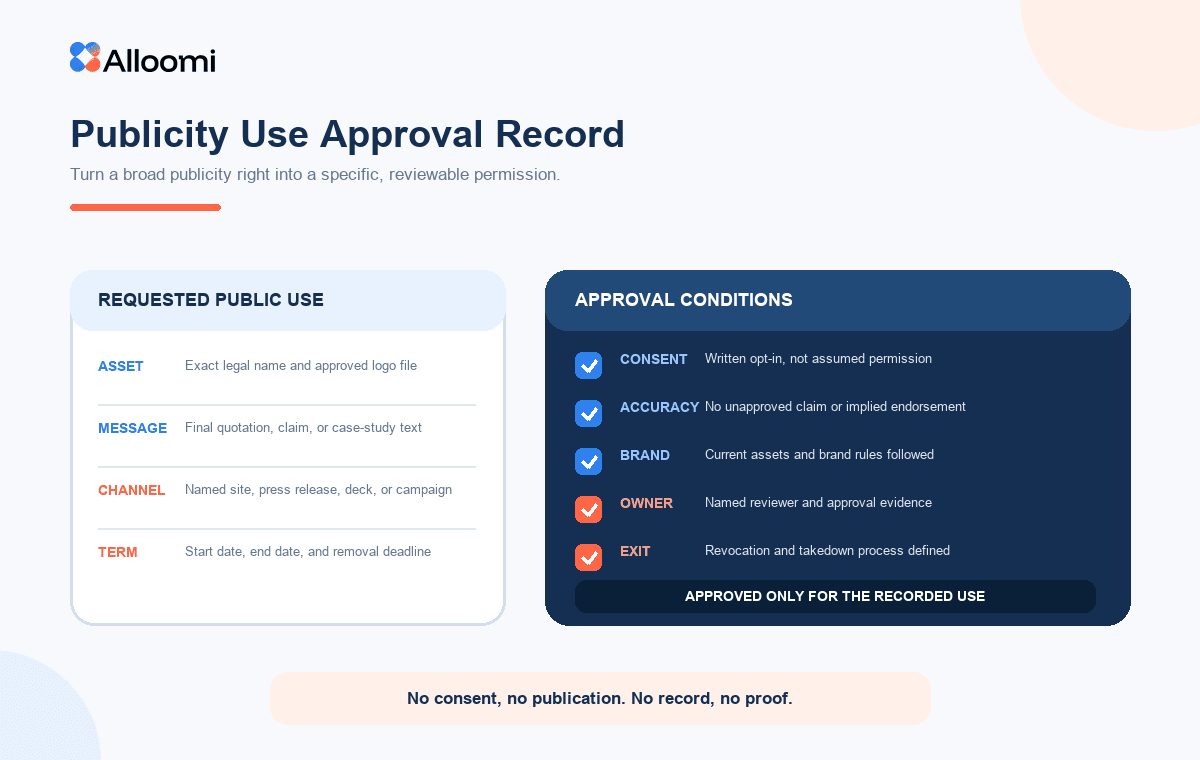
Publicity permission should connect consent with the exact asset, message, channel, term, and removal process.
Define the Approved Name, Logo, and Assets
The clause should identify the exact legal name, trade name, logo file, trademark, product screenshot, or quotation that may be used. It should not permit the recipient to create modified marks, combine logos, change colors, remove required symbols, or imply ownership.
The USPTO explains that a trademark identifies the source of goods or services and distinguishes them from others. See the agency's trademark basics. Contract permission should therefore address how the mark is displayed and what source or relationship it communicates.
Check whether current brand guidelines are incorporated and whether future updates automatically apply. If guidelines are hosted online, record the applicable version or establish a reasonable update process.
Control the Message and Implied Endorsement
Using a customer name may communicate more than the fact that a contract exists. Placement, wording, imagery, and surrounding claims can imply that the customer recommends the supplier, achieved particular results, or approves a product feature.
The FTC states that endorsements must reflect honest experience and may not communicate deceptive or unsubstantiated claims. Its Endorsement Guides resources also address disclosure of material connections that may affect how an audience evaluates an endorsement.
The agreement should distinguish a factual customer reference from an endorsement. If a quote, testimonial, or success metric will be used, require approval of the final wording and context.
Limit Channels, Geography, and Audience
Specify where the approved material may appear. Relevant channels may include the supplier's website, social media, email, events, proposals, app stores, paid advertising, analyst materials, or investor presentations.
Consider whether permission is worldwide or limited to certain countries, languages, business units, products, or audiences. A customer may approve use in a private enterprise pitch deck but not in public advertising directed at consumers.
Create an Approval Workflow
An approval right is useful only if the process is workable. Define:
• The person or role authorized to request and grant approval.
• The materials and context that must be submitted.
• The review period.
• Whether silence means approval or rejection.
• Whether minor formatting changes require renewed approval.
• How corrections and withdrawals are communicated.
Store the approved version, approval date, permitted channels, and expiration date. Informal approval from a sales contact may not be enough when the contract assigns approval authority to legal or communications personnel.
Set the Term and Removal Deadline
Determine when permission begins and ends. It may last for the contract term, a campaign period, a fixed number of months, or until written revocation.
The clause should state how quickly material must be removed after termination, revocation, rebranding, or a factual change. Different media may require different treatment. A website logo can be removed quickly, while printed event materials already distributed may need a sell-off or exhaustion exception.
Read the publicity term with the agreement's termination and survival provisions. The guide to renewal and termination review can help align operational dates.
Protect Confidential and Regulated Relationships
A public reference may reveal that a transaction, investigation, security project, acquisition, or regulated service relationship exists. Confirm that the publicity permission does not conflict with confidentiality, privacy, securities, procurement, professional, or sector-specific restrictions.
For a relationship that has not been publicly announced, even a logo may reveal material information. Require coordination with the teams responsible for disclosure, communications, and regulatory compliance.
Address Case Studies and Performance Claims
A case study should define the approved facts, measurement period, methodology, customer attribution, and permitted edits. Avoid selecting unusual results without context or continuing to use statistics after they become outdated.
Require renewed approval if a material claim, headline, image, or distribution channel changes. A general logo permission should not automatically authorize a detailed case study.
If the content includes a testimonial or review, consult the FTC's endorsements, influencers, and reviews guidance.
Review Ownership and License Language
The mark owner should retain ownership. The clause should grant only a limited, nonexclusive, nontransferable, revocable license for approved purposes. It should address sublicensing to agencies, printers, event organizers, and hosting providers where necessary.
Check quality-control rights, attribution, trademark symbols, goodwill, infringement notices, and restrictions on registration or challenge. Review the clause with the broader IP ownership and license framework.
Keep Publicity Approvals With the Contract Record
Approvals often happen after signing. Retain the approved asset, final wording, channel, audience, approval email, date, expiration, and removal confirmation with the matter record.
If the parties change the publicity arrangement informally, determine whether the agreement requires a formal amendment or side letter. See How to Review Contract Amendments and Side Letters.
Common Publicity Clause Red Flags
• Automatic permission to use any name, logo, quotation, or result.
• No approval of final context or marketing claims.
• Permission that continues indefinitely after termination.
• No deadline for removing obsolete or revoked materials.
• Broad sublicensing without responsibility for agencies and vendors.
• Use that implies endorsement or partnership beyond the actual relationship.
• Conflict with confidentiality or announcement restrictions.
How Alloomi Can Support Publicity Clause Review
Alloomi AI can help teams locate publicity permissions, compare them with confidentiality and IP terms, identify changes between drafts, and connect an approval requirement with the relevant contract language and source records.
Human review remains necessary to confirm brand policy, marketing context, factual claims, regulatory requirements, and whether the final use matches the permission granted.
Conclusion
A useful publicity clause does not merely say that a party may use a customer name or logo. It identifies the approved asset, message, channel, audience, term, review process, and removal deadline. That structure protects the mark owner while giving the authorized user a permission it can actually follow.
Frequently Asked Questions
1. Can a supplier put a customer logo on its website?
Only when the contract or a separate approval permits that use. Check the exact asset, context, brand rules, duration, and removal process.
2. Is customer-logo use an endorsement?
Not always, but context may imply endorsement or approval. The final presentation and accompanying claims should be reviewed.
3. Should publicity permission survive termination?
That depends on the agreed use. A contract should state whether permission ends immediately, continues for a transition period, or survives for approved archival materials.