A force majeure clause allocates the risk of extraordinary events that prevent or delay performance. The clause becomes difficult when the risk is known in general but its timing, scale, location, or consequence remains uncertain.
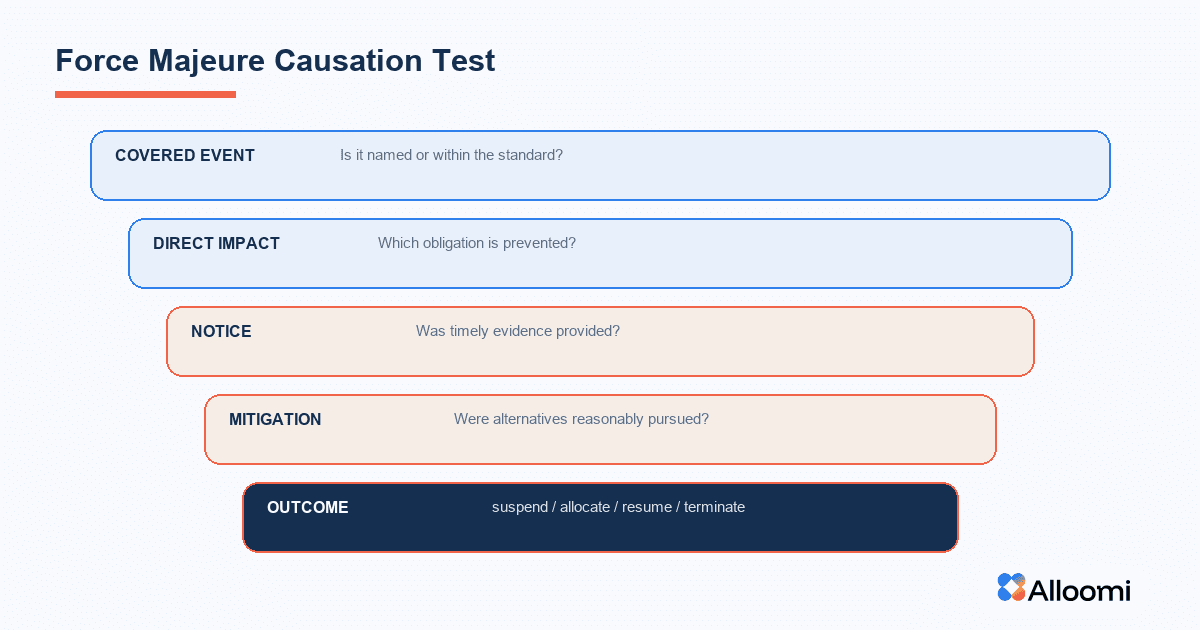
Do not review the provision as a list of disasters. Review it as a causal process: covered event, effect on a specific obligation, required notice, mitigation, allocation of scarce capacity, suspension, payment consequences, and exit.
Start With the Actual Obligations at Risk
Identify the obligations that may be excused or delayed. Delivery, implementation, support, payment, confidentiality, security, disaster recovery, and regulatory cooperation may deserve different treatment.
A party may be unable to deliver goods while still being able to notify the other party, protect data, preserve records, refund prepaid amounts, or cooperate with transition. Avoid language that suspends every obligation automatically.
Define Covered Events With Both Examples and a Standard
Common examples include natural disasters, war, terrorism, civil unrest, epidemics, labor disruption, government orders, utility failure, transportation interruption, and cyber events. The general standard should address whether the event is beyond reasonable control and whether the affected party caused or could reasonably avoid it.
Cornell's force majeure overview notes that courts often interpret these clauses narrowly and that economic hardship alone is generally insufficient. Specific language and governing law matter.
Test Foreseeability and Assumed Risk
An event may be foreseeable without its exact impact being avoidable. Ask whether the parties already knew about the risk, priced it, accepted a delivery obligation despite it, or required a continuity plan.
If a disruption is recurring, use a specific allocation rather than relying on a broad force majeure clause. Examples include alternative sourcing, minimum inventory, geographic redundancy, priority allocation, or a capped price adjustment.
Require Direct Causation
The clause should require the covered event to prevent or materially delay the particular performance. A general market downturn, increased cost, or unrelated shortage should not excuse performance unless the language expressly allocates that risk.
Ask the affected party to identify the obligation, event, start date, expected duration, causal link, mitigation steps, and information supporting the claim.
Compare the Clause With Impracticability Rules
Contract language may expand or narrow default doctrines. For sales of goods, UCC Section 2-615 addresses commercial impracticability, allocation where capacity is partially affected, and seasonable notice. The contract may impose a greater obligation than the default rule.
Cornell's explanation of impracticability distinguishes excessive difficulty or expense from literal impossibility. Do not assume the clause and default doctrine produce the same result.
Make Notice Operational
Notice should be prompt enough to let the other party respond, but not so rigid that a party loses relief before it can assess an emergency. Define the recipient, method, content, updates, and effect of late notice.
Require periodic status reports and notice when the event ends. Link the process to the agreement's general notice clause, but consider an emergency channel for operational disruption.
Define Mitigation and Alternative Performance
Require commercially reasonable mitigation, but avoid an unlimited duty to incur any cost. Address alternate suppliers, substitute transportation, remote performance, partial delivery, workarounds, and priority allocation.
Where only part of capacity is affected, define how available supply is allocated. The parties may require fair allocation, priority for committed customers, or a documented methodology.
Separate Payment Obligations
Many clauses state that force majeure does not excuse payment for services already delivered. That may be appropriate, but prepaid fees for unavailable future services need separate treatment. Address credits, refunds, minimum commitments, take-or-pay duties, and disputed invoices.
Review the financial consequences alongside renewal and price terms and the wider risk allocation described in How to Review Warranty and Disclaimer Clauses.
Add a Long-Stop Termination Right
If the event continues beyond a defined period, either or both parties may need a termination right. Consider different periods for critical and noncritical services. Address transition, return of data, unfinished deliverables, inventory, prepaid amounts, and licenses.
For technology and service arrangements, combine the long-stop right with transition assistance rather than an abrupt exit. The wider review process in How to Review a Contract helps connect force majeure with the rest of the agreement.
How Alloomi Can Support Force Majeure Review
Alloomi can help legal teams locate force majeure language across contracts, compare event lists and notice periods, connect obligations to affected suppliers, and preserve evidence for review. It does not determine whether an event legally excuses performance.
Frequently Asked Questions
1. Does increased cost qualify as force majeure?
Usually not by itself unless the contract expressly provides otherwise or applicable doctrine supports relief under the facts.
2. Should cyber incidents be listed?
They may be, but the clause should distinguish events beyond reasonable control from failures caused by inadequate security or failure to follow required controls.
3. Can force majeure excuse payment?
It depends on the clause and the payment. Amounts due for completed performance are often treated differently from prepaid future services.
Conclusion
A useful force majeure clause does more than name events. It connects an external disruption to a specific obligation, requires evidence and mitigation, governs notice and allocation, and provides a workable response if the disruption continues.