An audit clause can verify pricing, security, compliance, service performance, royalties, or use restrictions. Poorly drafted language can also expose unrelated records, disrupt operations, disclose sensitive information, and create open-ended cost.
The goal is not to remove accountability. It is to connect each audit right to a defined purpose, relevant records, a workable process, and a proportionate remedy.
Define the Purpose Before the Scope
Begin by asking what the audit is supposed to test. A royalty audit, security assessment, invoice review, privacy compliance audit, and regulatory records examination require different evidence.
Generic language allowing inspection of all books and records is rarely precise enough. The clause should identify the obligations being tested and the records reasonably necessary to test them.
Specify the Records and Systems in Scope
Define whether the audit covers invoices, time records, usage data, access logs, policies, certifications, subcontractor records, incident reports, source documents, or technical systems. Exclude legally privileged information, unrelated customer data, trade secrets outside the audit purpose, and records prohibited from disclosure.
Government contracting illustrates the value of specificity. FAR 52.215-2 defines records broadly but connects examination rights to particular pricing, cost, performance, and reporting purposes. Commercial parties should not copy government language without adapting it to their relationship.
Build a Controlled Audit Process
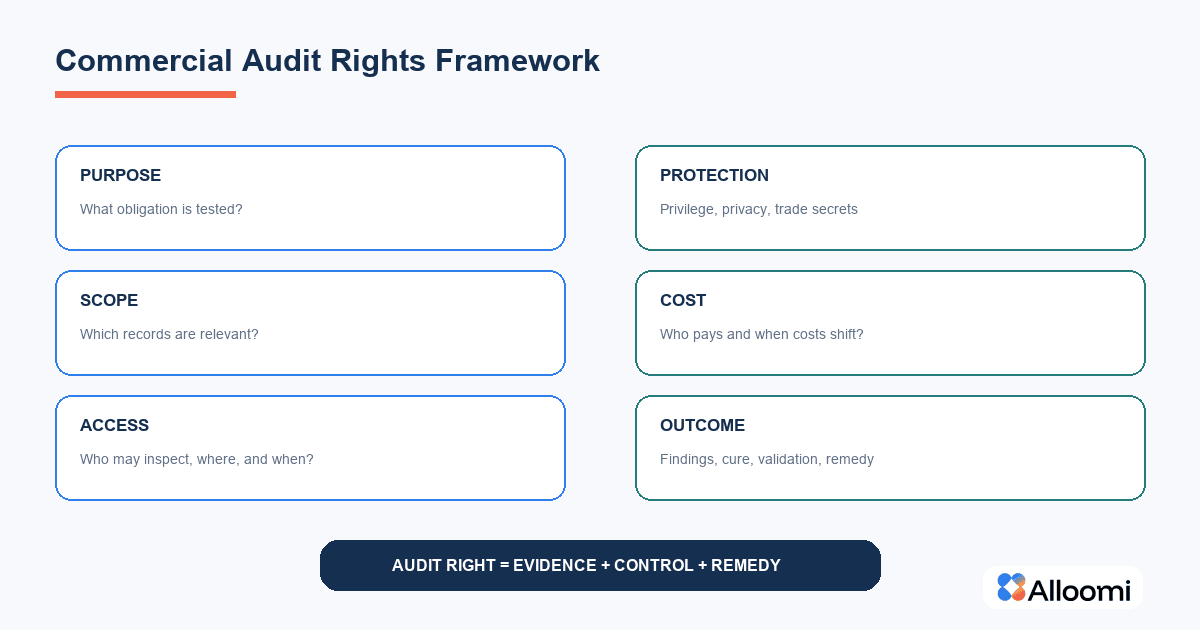
Address each procedural question directly:
• Who may conduct the audit?
• How much advance notice is required?
• How often may audits occur?
• May an audit occur after a security incident or suspected breach?
• Must the reviewer be independent and noncompetitive?
• Can remote evidence or certifications satisfy the request?
• What business hours, locations, and security rules apply?
• How are disputes over scope resolved?
Protect Confidential and Third-Party Information
The auditor should be bound by confidentiality obligations at least as protective as the contract. Define permitted use, disclosure recipients, storage, return or destruction, and breach responsibility. If reports contain information about other customers, require redaction or aggregated evidence where appropriate.
For audits involving personal data, align access with the safeguards in How to Review a Data Processing Agreement Before Signing. An audit right should not force a supplier to violate privacy or confidentiality duties owed to others.
Allocate Costs and Disruption
A common approach is for the requesting party to bear ordinary audit cost, with cost shifting if the audit identifies a material underpayment or serious breach above an agreed threshold. Define which costs shift, including auditor fees, internal support, remediation validation, and repeat testing.
Limit operational disruption by requiring document requests before interviews, reasonable scheduling, secure review environments, and use of existing reports where they answer the question. However, do not let convenience prevent access after a credible incident.
Turn Findings Into a Remediation Process
The clause should explain how findings are documented, challenged, corrected, and closed. State whether the auditee receives a draft report, how confidential findings are handled, and when a remediation plan is due.
Connect audit findings to cure rights, service credits, reimbursement, indemnity, suspension, or termination. The broader framework in What Is a Contract Compliance Audit? can help teams move from evidence collection to corrective action.
Set a Records Retention Period
An audit right is ineffective if relevant records may be destroyed before review. Align retention with payment cycles, limitation periods, regulatory requirements, dispute timelines, and survival language. FAR record-retention provisions provide one public example of how audit and retention interact, including FAR Subpart 4.7.
Ensure the obligation survives termination for a defined period and follows relevant records held by subcontractors.
Check Flow-Down Requirements
If a supplier depends on subcontractors, the prime agreement should state whether equivalent audit, evidence, and retention duties must flow down. The customer may not need direct access to every subcontractor, but the supplier should remain responsible for obtaining evidence and correcting failures.
Review these obligations alongside the vendor governance issues in What Is a Contract Compliance Audit?. Also compare the clause with boilerplate provisions governing confidentiality, notices, and dispute resolution.
How Alloomi Can Support Audit Preparation
Alloomi can help authorized teams connect audit requests with contract clauses, supporting records, findings, owners, remediation tasks, and review history. Human reviewers remain responsible for privilege, scope, materiality, and legal conclusions.
Frequently Asked Questions
1. Should an audit clause allow access at any time?
Usually no. Ordinary audits should have notice and frequency limits, with narrower exceptions for incidents, regulatory demands, or credible suspected breaches.
2. Can a certification replace an audit?
Sometimes. A current independent report may satisfy routine needs, but the contract should preserve targeted rights where the report does not cover the relevant obligation.
3. Who should pay for the audit?
The contract should allocate ordinary cost and define when material findings shift reasonable audit or remediation expenses.
Conclusion
A defensible audit clause is specific, controlled, and usable. Define the purpose, records, reviewer, process, confidentiality, cost, remediation, retention, and subcontractor responsibilities before a dispute begins.