A notice clause looks administrative until a party tries to terminate, preserve a claim, reject work, invoke force majeure, dispute an invoice, or stop automatic renewal. A message may communicate the issue clearly and still fail to satisfy the contract.
Review notice language as a seven-part validity test: trigger, content, sender, recipient, delivery method, timing, and evidence of receipt.
List Every Notice Trigger in the Agreement
Do not review only the general notice section. Search the entire contract for notice obligations tied to:
• Breach and cure.
• Termination and nonrenewal.
• Claims and indemnification.
• Warranty defects and rejection.
• Price increases and invoice disputes.
• Security or privacy incidents.
• Force majeure.
• Changes in control, address, or key personnel.
• Insurance events and litigation.
Create a notice matrix with the trigger, deadline, recipient, method, required content, and consequence of failure. The process in The Legal Deadline Problem can help connect contractual dates with accountable owners.
Define What the Notice Must Say
Some notices require more than a statement of concern. A breach notice may need to identify the provision, facts, requested cure, and cure deadline. An indemnity notice may need the claim, demand, proceeding, known amount, and supporting materials.
A force majeure notice may require the event, affected obligations, expected duration, and mitigation. A nonrenewal notice should identify the agreement and effective end date without creating ambiguity about partial termination.
Identify the Correct Recipient
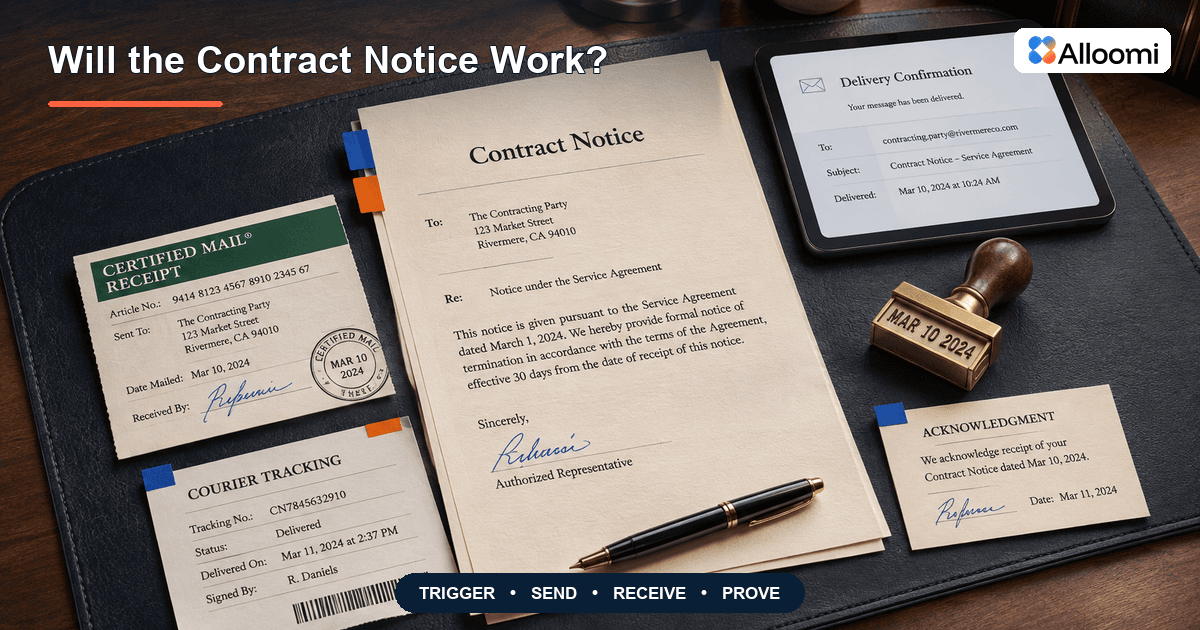
Separate operational contacts from legal notice recipients. A project manager may know about a problem but lack authority to receive formal notice. The clause should name a role, address, and email rather than relying only on one employee.
For high-impact notices, consider requiring a copy to legal or a designated contract owner. Establish a process for updating addresses without amending the entire contract.
Choose Delivery Methods That Produce Evidence
Common methods include personal delivery, courier, certified or registered mail, and email. Each method should state when notice is deemed received and what happens after failed delivery, refusal, an automated bounce, or an outdated address.
Electronic form is generally not invalid merely because it is electronic under the federal E-SIGN Act, but that does not mean every email satisfies a contract's agreed notice method. Follow the contract and applicable law.
Make Timing Rules Clear
Specify whether the deadline runs from sending, actual receipt, deemed receipt, knowledge of the event, invoice date, or another trigger. Define business days, time zone, holidays, and treatment of after-hours delivery.
A notice sent at 11:58 p.m. may be timely under one clause and late under another. Avoid relying on assumptions. FAR Subpart 11.4 offers a practical example of using a delivery method that provides evidence of receipt when timing turns on receipt.
Distinguish Actual Receipt From Contract Compliance
Actual awareness may not cure failure to use the required channel, recipient, or content. Conversely, some courts may consider prejudice, waiver, course of dealing, or the purpose of the notice requirement. The answer depends on the governing law and clause.
Legal teams should avoid assuming either extreme. Preserve evidence of both formal compliance and actual receipt.
Review Deemed Receipt Language
Deemed receipt rules should be realistic. Mail may be deemed received after a set number of business days; courier delivery may depend on tracking; email may be effective on transmission if no bounce is received, or only after acknowledgment.
For critical notices, use more than one agreed method. State which method controls if delivery dates differ.
Connect Notice to Cure and Termination
Check whether the notice starts a cure period, suspension right, termination right, or claim deadline. Define whether cure requires complete correction, a remediation plan, or reasonable progress.
Review these mechanics with renewal terms, warranty clauses, and indemnification procedures.
Preserve the Notice Record
Keep the signed notice, attachments, final approved version, sending record, courier tracking, delivery confirmation, bounce message, acknowledgment, internal approval, and calendar entry. Record which contractual trigger and deadline the notice addresses.
If the parties later amend addresses or methods, preserve the amendment and effective date. See How to Review Contract Amendments and Side Letters.
A Contract Notice Matrix
| Notice type | Key deadline | Evidence to preserve |
|---|---|---|
| Breach and cure | Contractual cure period | Provision cited, facts, delivery, acknowledgment, and cure response |
| Nonrenewal | Days before renewal date | Agreement identity, end date, sending record, and receipt |
| Indemnity claim | Prompt notice or stated claim period | Demand, proceeding, known facts, attachments, and defense response |
| Force majeure | Prompt or stated period after event | Event, affected duties, mitigation, expected duration, and updates |
| Security incident | Specified hours after awareness | Discovery time, scope, containment, recipients, and status reports |
Common Notice Failures
Notice problems often arise because a business user sends a message to the operational contact but not the legal notice recipient, the subject line never identifies the agreement, an attachment is omitted, the cure period is calculated from the wrong date, or the sender cannot prove delivery. Another frequent problem is using an address from an old contract version after a later amendment changed the notice details.
Use a pre-send checklist and a second reviewer for termination, nonrenewal, indemnity, and other high-impact notices. The reviewer should confirm the current contract version, trigger, deadline, recipient, delivery method, content, and evidence plan before release.
Build a Notice Playbook
For frequently used agreements, prepare approved templates for breach, cure, nonrenewal, termination, claim, incident, and force majeure notices. Templates should prompt users for required facts without replacing lawyer review.
Connect the playbook to the contract repository and matter owner. The governance approach in How to Govern a Contract Clause Library can help control versions and use conditions.
How Alloomi Can Support Contract Notices
Alloomi can help legal teams locate notice requirements, connect triggers to deadlines and approved contacts, organize supporting evidence, and preserve the final record. It does not decide whether a notice is legally effective.
Frequently Asked Questions
1. Is an email always valid notice?
No. Check the contract's permitted methods, recipient, content, timing, and applicable law.
2. What if the other party actually received the message?
Actual receipt may matter, but it may not cure every contractual defect. Preserve the evidence and obtain jurisdiction-specific advice.
3. Should notice addresses be individual names?
Usually not alone. Use stable roles or departments and a controlled process for updating contact details.
Conclusion
A valid notice is a controlled legal act, not merely a message. Map every trigger, require the right content, send it to the correct recipient through an approved method, calculate timing precisely, and preserve proof.