How Lawyers Use AI to Prepare Witness Interview Memos Without Distorting Testimony
AI can turn recordings and interview notes into a structured memo quickly. The risk is that it can also make a hesitant, incomplete, or disputed account sound settled. A reliable witness memo must preserve what the witness actually said, distinguish observation from inference, and remain connected to the recording, transcript, or contemporaneous notes.
The Memo Is Not the Testimony
A witness interview memo is a lawyer's work product based on an interview. It may summarize facts, identify follow-up questions, record credibility concerns, or organize the account by issue. It should not silently convert approximate dates into exact ones, remove qualifications, combine answers, or insert facts from other documents.
AI is most useful for organization: creating a topic index, locating names and dates, comparing the account with records, and drafting a first structure. The interviewer remains responsible for accuracy and legal judgment.
Before the Interview
Decide whether recording is lawful and appropriate, obtain required consent, confirm who represents the witness, and explain the purpose and confidentiality limits. Rules vary by jurisdiction, and firm policy may impose additional controls.
Prepare an issue outline without scripting the witness's answer. Review the matter chronology, key documents, and unresolved contradictions. A source-connected chronology can make this preparation more precise. See How to Build a Litigation Chronology With AI.
A Safe AI-Assisted Memo Workflow
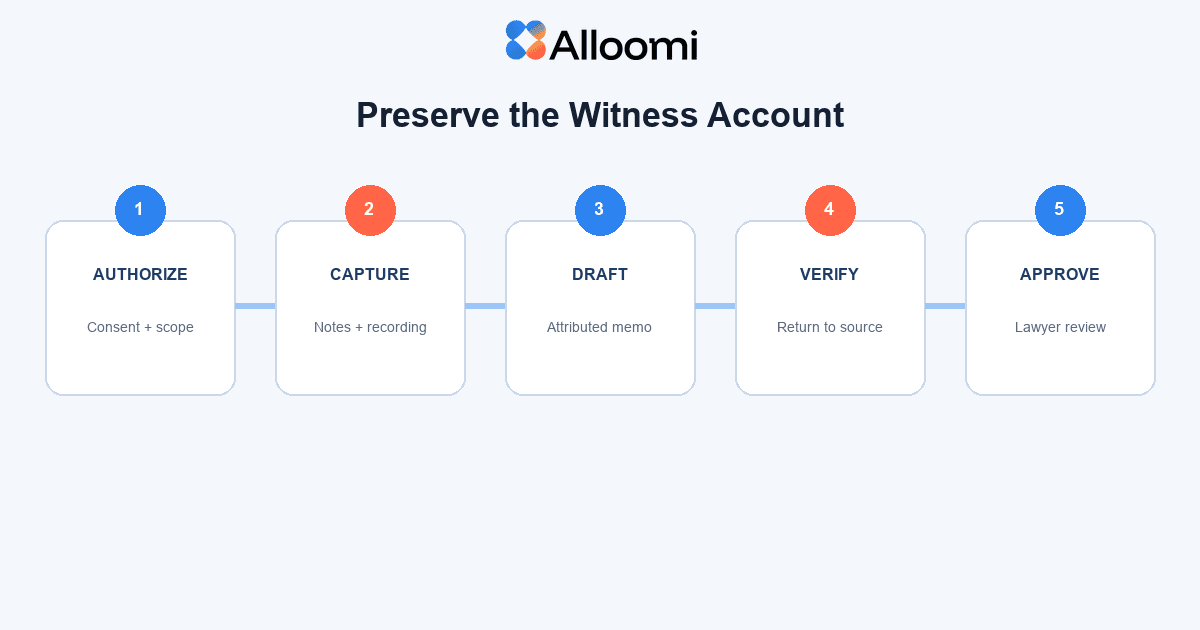
Preserve the original sources
Keep the audio, transcript, handwritten notes, exhibits shown to the witness, participant list, date, location, and interviewer. Do not let the AI summary replace these materials.
Draft with attribution
Use language such as "the witness stated," "the witness did not recall," or "counsel asked." Separate the witness's account from facts drawn from documents or other interviews.
Preserve uncertainty
Record qualifiers such as approximately, possibly, usually, or to the best of the witness's recollection. AI often removes these because certainty reads more cleanly.
Check every material statement
Return to the transcript or recording. Verify dates, quotations, names, sequences, denials, and admissions. Mark inaudible or ambiguous passages rather than guessing.
Record conflicts without resolving them silently
If the witness conflicts with an email or another witness, preserve both accounts and identify the follow-up question. The workflow in Finding Case Contradictions can support this comparison.
What a Review Checklist Should Ask
• Does every quotation match the recording or transcript?
• Did the memo preserve uncertainty and lack of recollection?
• Are observations separated from lawyer impressions?
• Are facts from exhibits attributed to the exhibit rather than the witness?
• Were material omissions and follow-up questions recorded?
• Are privilege, work product, access, and retention handled correctly?
Confidentiality and Supervision
ABA Formal Opinion 512 explains that lawyers using generative AI must consider competence, confidentiality, communication, supervision, candor, and fees. Interview recordings and notes may contain privileged, confidential, personal, or highly sensitive information. Do not upload them to an unapproved service.
ABA Model Rule 1.6 addresses confidentiality of information relating to representation. Access to AI-generated memos should follow the same matter permissions as the underlying interview materials.
How Alloomi Can Support Interview Context
Alloomi can help authorized legal teams connect interview materials with matter facts, documents, decisions, and open questions. It does not decide credibility or replace the interviewer. The lawyer should approve the final memo and determine how it may be used.
Strong intake also matters because participant names, roles, and matter scope affect the interview plan. See What Is Legal Case Intake?.
Separate Three Types of Content
A reliable memo distinguishes the witness's account, the source documents discussed during the interview, and counsel's analysis. These layers may appear together in one work product, but they should not be blended. If a date came from an exhibit rather than the witness's memory, say so. If counsel believes an answer is inconsistent, place that assessment in a separate analysis section.
Use a Correction and Approval Record
Preserve the first AI draft, interviewer corrections, final approved version, and the reason for material changes. This is particularly important when the memo will inform a declaration, deposition outline, regulator response, or board investigation. The record should show that the lawyer returned to the source rather than editing the summary based only on recollection.
Do not ask AI to imitate the witness's voice or fill gaps in the narrative. Missing information is a finding. Record it and prepare a follow-up question.
Frequently Asked Questions
1. Can AI summarize a witness interview?
Yes, as a working draft. A lawyer should compare every material point with the original source before relying on it.
2. Should the memo include credibility conclusions?
Only with care. Separate observed behavior and inconsistencies from unsupported conclusions about truthfulness.
3. Can the recording be deleted after the memo is approved?
Follow applicable law, preservation duties, client instructions, and firm retention policy. The memo should not automatically replace the source.
Conclusion
AI can reduce the administrative burden of witness memo preparation, but the value depends on fidelity. Preserve sources, retain uncertainty, attribute information correctly, verify material statements, and keep the lawyer's analysis separate from the witness's account.