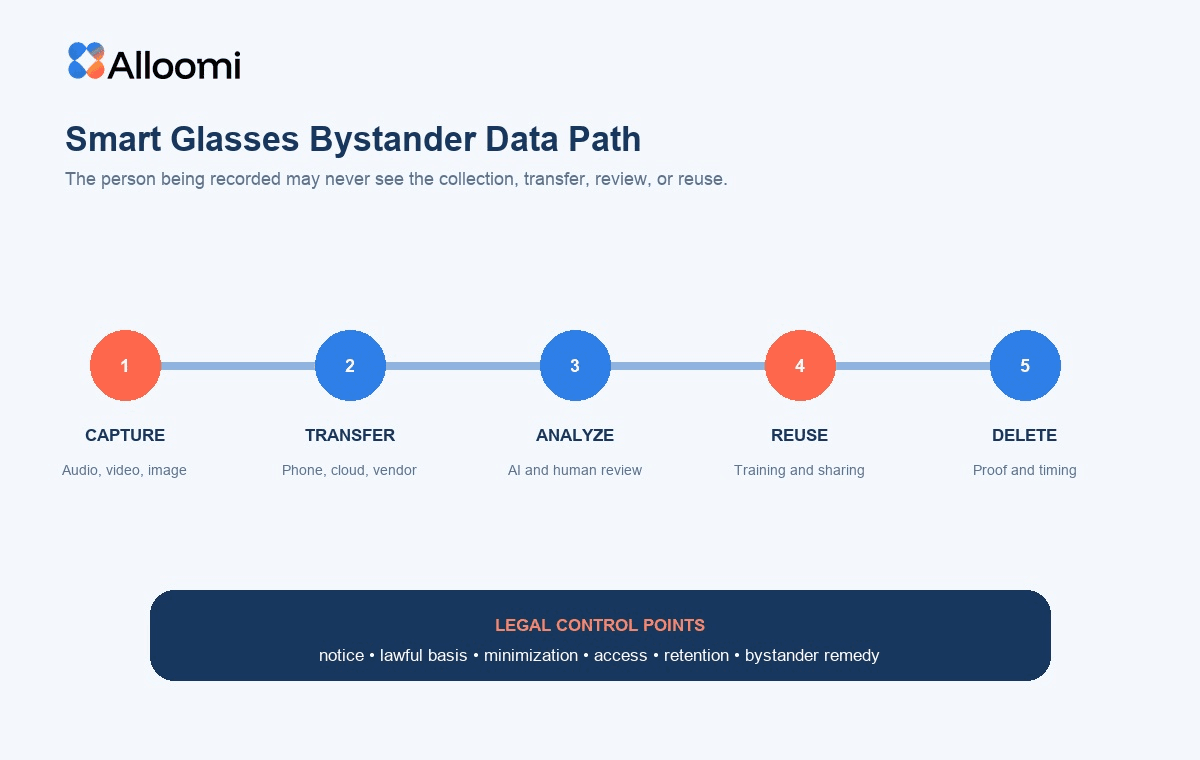
Smart glasses create a privacy problem that mobile-phone notices do not solve: the wearer knows a camera or microphone is present, while the person being recorded may not notice the device, the indicator, the transfer, or the later use of the data.
On November 26, Dutch consumer and digital-rights groups asked the Amsterdam District Court to restrict or halt sales of Meta’s AI-powered glasses. The claims remain allegations, and the court is expected to rule later. But the dispute gives legal teams a concrete map of the evidence regulators and claimants may request.
What Is the Dutch Smart Glasses Case About?
The groups argue that camera-equipped glasses enable people to record others without meaningful awareness and that captured material may be processed or reused for AI. Reuters reported the November 26 hearing and the requested restrictions. The Dutch court filing provides direct case material.
The European Data Protection Board’s 2026 smart-glasses statement separately highlights processing that may be difficult for data subjects to perceive or control. These sources should be read as litigation and regulatory developments, not as a final ruling that every product is unlawful.
What Should Companies Be Able to Explain?
• What the device captures, when capture starts, and whether passive sensing occurs.
• How a bystander can recognize recording in different light, angles, and environments.
• Which data stays on-device, moves to a phone, enters the cloud, or reaches a vendor.
• Whether humans review recordings and whether public or private content trains AI.
• The lawful basis, retention period, deletion path, access controls, and security measures.
• How a non-user can object, request deletion, report abuse, or obtain a remedy.
Why a Recording Light Is Not the Whole Answer
An indicator can support transparency, but legal teams should test whether ordinary people understand it, whether it remains visible, whether it can be obstructed, and whether it accurately reflects audio, image, and AI processing. Notice should match the actual data flow rather than only the visible recording event.
Which Contracts Need Attention?
Retailer terms, cloud-processing agreements, model-provider contracts, human-review arrangements, warranty language, and venue policies may allocate different responsibilities. The product team also needs defensible evidence for marketing claims about privacy and safety.
Related controls appear in Alloomi’s guides to biometric privacy, data-processing agreements, AI consumer-protection claims, warranties and disclaimers, and regulatory-change monitoring.
How Alloomi Can Support Review
Alloomi AI can help authorized legal teams connect privacy notices, product specifications, data maps, vendor contracts, complaints, and regulator materials to a source-linked review record. It cannot determine lawful basis or replace jurisdiction-specific advice.
Frequently Asked Questions
1. Is recording in public always lawful?
No single rule applies everywhere. Audio, biometric data, sensitive locations, reasonable expectations, platform use, and local law may change the analysis.
2. Does user consent cover bystanders?
Not necessarily. The wearer’s agreement with the manufacturer does not automatically resolve the rights of other people captured by the device.
3. Can smart-glasses footage be used to train AI?
That depends on notices, settings, lawful basis, contracts, jurisdiction, and the nature of the content. Companies should document the precise route and controls.